
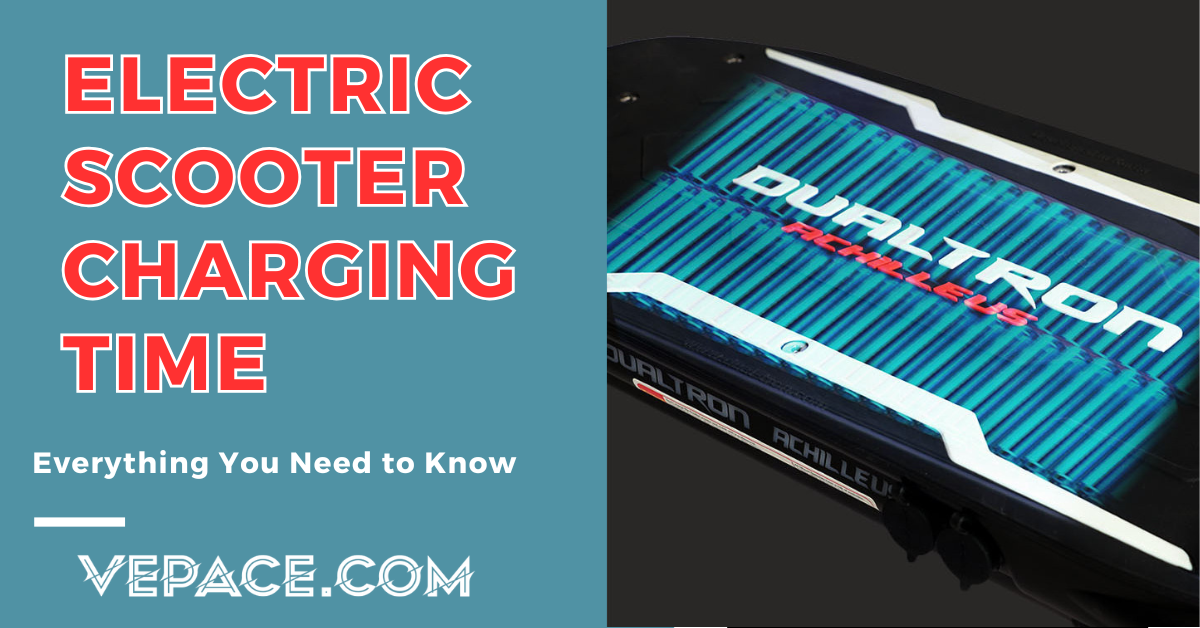
Electric scooters are practical, eco-friendly, and efficient—but one question every rider has is:
“How long will it take to charge my scooter?”
Whether you ride a Kukirin G2, Dualtron Thunder 3, Teverun Fighter Mini, or Kuickwheel M16 Pro, charging time impacts daily commuting, weekend rides, and long-distance trips. Understanding charging times helps you plan your rides, extend battery life, and maximize performance.
In this complete guide by Vepace, we cover:
-
How charging time is calculated
-
Fast vs standard charging
-
Battery capacity and voltage
-
Tips to reduce charge time
-
Charging safety

How Electric Scooter Charging Time Works
Charging time depends on battery capacity (Wh), voltage (V), and charger power (A/W).
Basic formula (simplified):
Charging Time (hours) ≈ Battery Capacity ÷ Charger Power
For example:
-
A 48V 15Ah battery (720Wh) with a 2A charger will take roughly 7–8 hours
-
Using a faster 5A charger, the same battery could be ready in 3–4 hours
⚡ Most commuter scooters are designed for overnight charging—enough for daily use without hassle.

Factors That Affect Charging Time
1. Battery Size (Ah/Wh)
Larger batteries take longer to charge.
-
Small commuter scooters like Kukirin G2 Pro charge quickly (7–8h)
-
High-performance scooters like Dualtron Thunder 3 or X LTD take longer ( < 28h)
2. Charger Power Output
-
Standard chargers = slower
-
Fast chargers = faster, but some batteries limit maximum charging rate to preserve lifespan
3. Battery Age and Condition
Old or degraded batteries may charge more slowly and lose capacity over time.
4. Temperature
-
Cold weather slows charging
-
Warm conditions allow optimal charging speed

Average Charging Times by Scooter Category
Here’s a general guide for Vepace’s popular models:
Lightweight Urban Scooters
-
Charging time: 7–9 hours
-
Perfect for overnight charging or midday top-ups
Mid-Range Commuters
-
Charging time: 10–12 hours
-
Suitable for daily commuting with moderate distances
High-Performance Models
-
Charging time: 12–28 hours
-
Designed for long-range or heavy-duty rides; fast-charging options recommended for quicker turnaround

Fast Charging vs Standard Charging
Standard Charging
-
Slower, gentle on battery
-
Preserves lifespan
-
Ideal for overnight or routine charging
Fast Charging
-
Reduces wait time by up to 50%
-
Higher heat stress on battery
-
Best used occasionally, not daily
Vepace tip: Always balance speed vs battery health—a slower charge overnight is safest.

Tips to Minimize Charging Time
-
Use the correct charger — every scooter has a specific recommended charger
-
Keep batteries warm — avoid cold storage when charging
-
Charge before fully empty — lithium-ion batteries charge faster at 20–80% capacity
-
Consider dual chargers for high-capacity scooters
-
Avoid overcharging — unplug after reaching 100% to preserve lifespan
How Voltage and Battery Size Affect Charge Time
High-voltage scooters (60V–84V, like Dualtron Thunder 3) have longer charging times but store more energy, giving you more range.
Smaller voltage scooters (36V–48V) charge faster but may require frequent daily charging.
Safety Tips When Charging Your Scooter
-
Always charge in a dry, ventilated space
-
Use only manufacturer-approved chargers
-
Avoid covering the scooter while charging
-
Monitor for excess heat or unusual smells
-
Do not leave charging unattended for very long periods
Following these guidelines ensures both safety and battery longevity.

Vepace’s Charging Recommendations for Popular Models
-
Kukirin G2/G2 Pro: 7–9h, ideal for overnight
-
Kukirin G2 Max: 10–12h, standard charger; optional fast charging available
-
Teverun Fighter Mini: 4–6h, Fast charging, stable daily performance
-
Dualtron Thunder 3 / X LTD: 15–28h, fast charger recommended for high usage
Conclusion
Understanding electric scooter charging times helps you plan your daily rides, extend battery lifespan, and get the most out of your scooter.
Whether you ride a lightweight commuter like Kukirin G2, a mid-range daily rider like G2 Master, or a powerful Dualtron for long-range commutes, knowing charging time and best practices ensures reliable performance every day.


