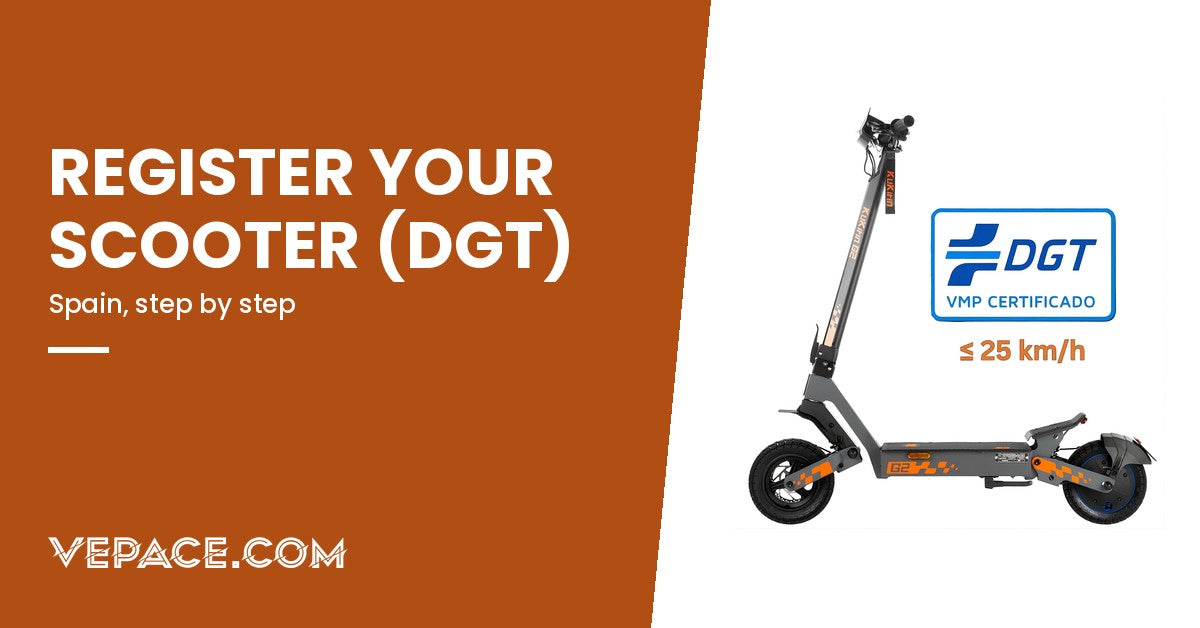
Since 30 January 2026, Spain has a national register for electric scooters, the Registro de Vehículos Personales Ligeros, run by the DGT (Dirección General de Tráfico). Registering your patinete eléctrico gives it an identification number and a small plate, and it is the step you need before you can take out the mandatory liability insurance.
This guide walks you through the whole process: what you need, how to register online, what it costs, how to get the plate, what changes for non-certified scooters, and the fines you risk. If you are still choosing a scooter, read our list of DGT certified electric scooters first.
Check the official source. This article reflects the DGT procedure in November 2026. The DGT electronic office (sede electrónica) is the reference for forms, fees and deadlines. This is general information, not legal advice.
The Process in Short
- Check that your scooter is DGT certified and find its certificate number and serial number.
- Register it online on the DGT sede electrónica (or in person by appointment).
- Pay the fee (tasa 4.1): 8.67 euros.
- Download your certificado de inscripción with your identification number (format M XXXX LLL).
- Buy the identification label from an authorised number plate maker and fix it on the scooter.
- Take out the mandatory liability insurance using your registration certificate.
Why Registration Became Necessary
Law 5/2025 of 24 July made third-party liability insurance compulsory for personal light vehicles, the legal category that includes electric scooters. To insure millions of scooters, insurers and the police needed a way to identify each one, so the government created the register with Royal Decree 52/2026 of 28 January, which came into force on 30 January 2026. According to the DGT, more than 4 million personal mobility vehicles are in use on Spanish urban roads.
A separate reform of the General Traffic Regulation, applicable from 1 October 2026, also made helmets compulsory for all riders and set the minimum age at 15. More on that below.
Step 1: Check Whether Your Scooter Is Certified
Since 22 January 2024, only scooters certified under the DGT's Manual de características de los VMP can be sold in Spain. A certified scooter has a stamped identification plate from the factory showing its certificate number and serial number, and it comes with a technical sheet (ficha técnica). Certified scooters are limited to 25 km/h by design.
| Certified scooter | Non-certified scooter | |
|---|---|---|
| Can be registered | Yes, permanently | Yes, temporarily |
| What you need | Certificate number + serial number | Owner details + invoice, technical sheet or photo |
| Can ride on public roads | Yes | Only until 22 January 2027 |
| Can be insured | Yes | Yes, until 22 January 2027 |
If you bought a scooter before 22 January 2024 without a certificate, you can still register and insure it, but its registration stops being valid on 22 January 2027. After that date it can no longer be ridden on public roads.
Step 2: Register Online, Screen by Screen
Go to the DGT sede electrónica and open the service Inscripción de un Vehículo de Movilidad Personal (VMP). You need one of the Spanish digital identification methods: a digital certificate, the electronic DNI or Cl@ve.
1. Contact details
State whether you are registering for yourself or on behalf of someone else. Enter your email, phone number and the address where the scooter is usually kept, which is used for notifications. A minor can own a registered scooter, but the online registration must be done by their legal guardian.
2. Vehicle details
- Enter the certificate number and the serial number from the scooter's plate. For a non-certified scooter, tick the "vehículo no certificado" box instead.
- Choose the type of use: private or public. Sharing companies must also provide their tax registration (IAE) and the address of use.
- Attach the technical sheet, or a photo of the plate or of the scooter if you do not have one.
3. Payment
Pay the tasa 4.1 (8.67 euros) by card or bank account, or enter the 12-digit number of a fee you have already paid. Accept the data protection and accuracy statement, and submit.
Step 3: Your Registration Certificate
Once accepted, you receive a PDF registration certificate (certificado de inscripción) with your details, the scooter's technical data and its identification number in the format M XXXX LLL. You also receive an email confirming the registration and the payment. The certificate is always digital and can be downloaded again at any time from the miDGT app or website.
Step 4: Get and Fit the Identification Label
The DGT does not post you a plate. Take your registration certificate to any authorised number plate maker (centro autorizado de expedición de placas de matrícula), the same type of business that makes car plates. They may ask for your ID, name and address. Fix the label in the plate holder or the dedicated space on your scooter; on non-certified scooters, place it somewhere clearly visible.
Registering in Person
If you cannot use digital identification, you can book an appointment (cita previa) online or by calling 060. Bring the official application form (Modelo 30), your DNI or NIE, the technical sheet or a photo of the scooter's plate, and proof of payment of the fee. Cash is not accepted. The DGT notes that in-person service is offered when needed, so confirm availability when booking. Companies must register online.
Step 5: Mandatory Insurance
With your registration certificate, you can insure the scooter with any insurer offering VMP cover. The law sets minimum cover of 6.45 million euros per accident for injuries and 1.3 million euros for property damage, valid in Spain. Spanish motoring sources report premiums from a few tens of euros a year, depending on the insurer and options.
| Offence (DGT figures) | Fine |
|---|---|
| Owning an uninsured scooter | 202 to 610 euros |
| Riding an uninsured scooter | 250 to 800 euros |
The amount depends on whether the vehicle is treated as a personal light vehicle or as a motor vehicle (more than 25 kg and more than 14 km/h).
Selling, Buying Second-Hand and Scrapping
- Change of owner: the buyer must request the transfer within 30 days using the official form. The identification number stays with the scooter and a new certificate is issued to the new owner. This applies to registered scooters with a valid certificate.
- Buying second-hand: ask for the registration certificate and check that the plate number matches. Avoid non-certified scooters: they stop being usable on public roads on 22 January 2027.
- End of life: the scooter must be handed in to an authorised treatment centre, which reports its removal to the vehicle register.
Other Rules for Scooter Riders in Spain
- Helmet compulsory for all riders, properly fastened, from 1 October 2026.
- Minimum age: 15 years.
- Lights on and a reflective element at night or in poor visibility.
- No pavements: they are reserved for pedestrians. Town halls decide which streets and lanes scooters may use.
- Banned: motorways, dual carriageways, interurban roads and urban tunnels.
- No headphones and no phone in hand. Alcohol limits are the same as for drivers.
DGT Certified Scooters We Sell
All the models below have a DGT certified version, delivered limited to 25 km/h with the plate and documents you need to register them. The full list is in our DGT certified electric scooters collection.
Kukirin G2 VMP (DGT)
The certified version of the popular G2: 500 W motor, two speed modes (15 and 25 km/h), four-link suspension and 10-inch off-road tyres. Choose the "G2 VMP (DGT)" option on the product page.
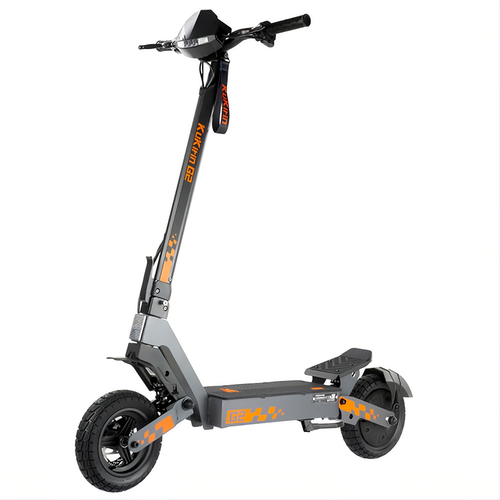
- Top speed45 km/h
- Range55 km
- Motor power800W
- Battery48V 15.6Ah
Kukirin G2 Pro DGT
A lighter G2 with dual-spring suspension and up to 65 km of claimed range in its certified version. Read our G2 Pro review.
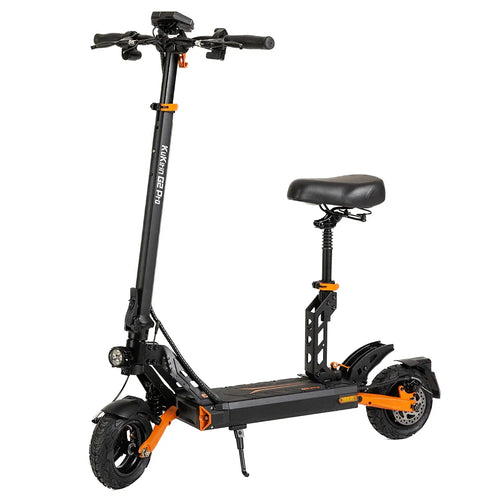
- Top speed45 km/h
- Range65 km
- Motor power600W
- Battery48V 15.6Ah
Dualtron Togo Max
A compact Dualtron with a 60 V battery, certified for Spanish roads and delivered at 25 km/h.
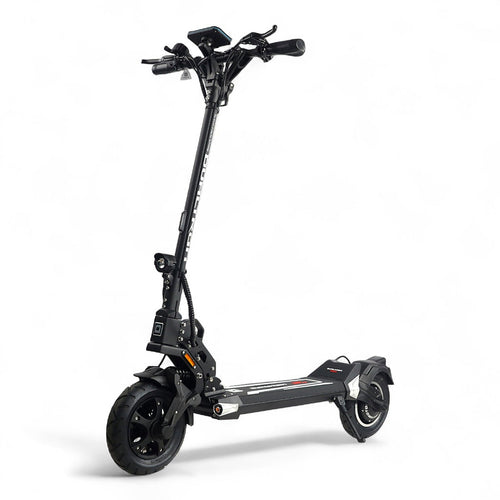
- Top speed52 km/h
- Range60 km
- Motor power1200W
- Battery60V 15.9Ah
Rovoron R5
A long-range dual-motor scooter with a 60 V 37.1 Ah battery, delivered limited to 25 km/h with DGT certification.
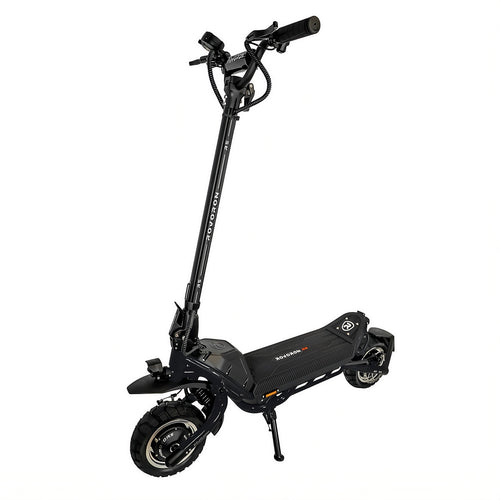
- Top speed70 km/h
- Range100 km
- Motor power2x900W
- Battery60V 37.1Ah
Sources: DGT sede electrónica, Inscripción de un VMP; DGT press release, 27 January 2026; Royal Decree 52/2026; Law 5/2025.